For as long as GLP-1 medications have existed, the answer to "does Medicare cover this for weight loss" has been no. Not because of a coverage policy anyone could appeal, but because federal law excludes drugs used for weight loss from Part D coverage, and changing that requires Congress.
That answer changes on July 1, 2026, in a narrow and temporary way. CMS is running a demonstration called the Medicare GLP-1 Bridge that gives eligible Part D beneficiaries access to certain weight-loss medications for a fifty dollar monthly copayment. It runs through December 31, 2027, and it operates outside the ordinary Part D benefit entirely.
If you treat patients over sixty-five, or patients approaching sixty-five who are currently paying cash, you are going to get asked about this. Here is what it is and how the mechanics work.
Why this exists in the shape it does
Medicare's statutory exclusion on weight-loss drugs is still on the books. CMS did not repeal it and cannot. What CMS does have is demonstration and innovation authority, which lets it test coverage approaches outside the normal benefit structure.
So the Bridge is not Part D coverage. Beneficiaries have to be enrolled in Part D to qualify, but the drug does not flow through their plan. CMS is using a single central processor to handle prior authorization, claims adjudication, and payment to pharmacies. Part D sponsors carry no risk for these drugs and do not have to opt in for their members to get access.
That design has a practical consequence worth telling patients up front. Because the Bridge sits outside the Part D benefit, the fifty dollar copayment does not count toward the Part D deductible or toward the annual out-of-pocket cap.
The Bridge is a placeholder for a larger model. CMS originally paired it with the BALANCE Model, intended to start in 2027. In May 2026 CMS announced that the Part D portion of BALANCE is delayed indefinitely and extended the Bridge through the end of 2027 to keep collecting utilization data.
Who qualifies
Two layers, and both have to be satisfied.
Plan enrollment. The beneficiary must be enrolled in a standalone prescription drug plan or in a Medicare Advantage coordinated care plan that includes prescription drug coverage. Beneficiaries in Special Needs Plans, employer and union group waiver plans, and the Limited Income Newly Eligible Transition program are eligible to participate.
Clinical criteria. Eligibility is built on body mass index with additional clinical conditions at lower thresholds. As announced, that means a BMI at or above 35 standing alone, a BMI at or above 30 paired with a qualifying condition such as heart failure, uncontrolled hypertension, or chronic kidney disease, and a BMI at or above 27 with further clinical criteria. CMS has revised the eligibility and drug specifications more than once since the initial announcement, so confirm the current criteria on the CMS Bridge page before you build them into your intake logic.
There is also an exclusion that will catch people. A beneficiary who already filled a GLP-1 prescription through their Part D plan in 2026 is not eligible for the Bridge in 2026, even if that fill came through supplemental weight-management coverage the plan offered on its own. CMS has not yet determined the lookback period it will apply in 2027.
Finally, the Bridge is for weight reduction specifically. If your patient is taking a GLP-1 for type 2 diabetes, sleep apnea, or MASH, that is a Part D question, not a Bridge question, and their plan may already cover it.
Which drugs are included
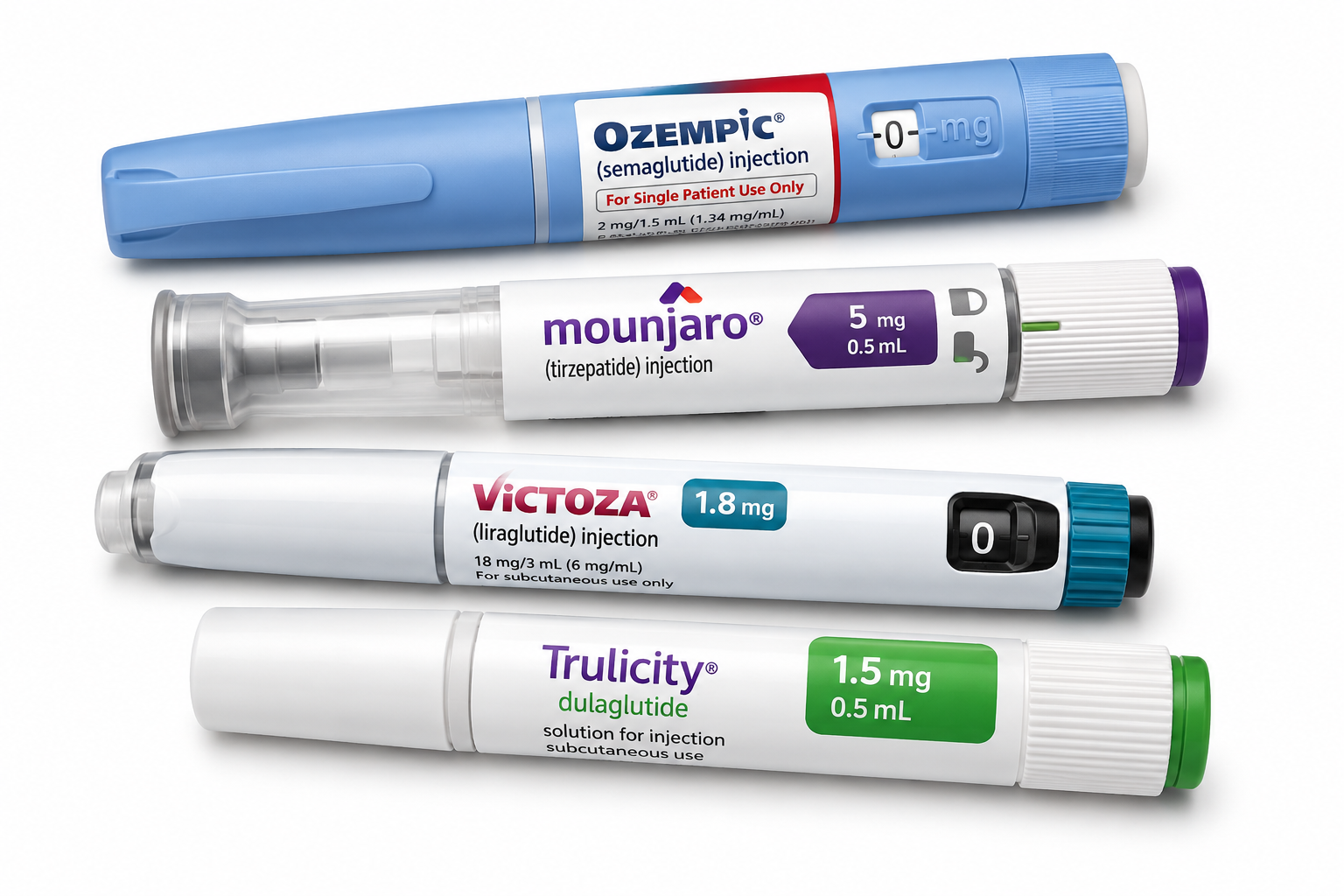
The Bridge covers a defined list of FDA-approved products used to reduce excess body weight and maintain weight reduction. As of the most recent CMS update, that list is Foundayo in all formulations, Wegovy in both injection and tablet form, and Zepbound in the KwikPen formulation only.
Two things follow from that list. The Zepbound limitation to a single formulation is easy to miss and will generate rejected prior authorizations. And compounded semaglutide and tirzepatide are not on the list and will not be, since the Bridge is built around FDA-approved products. If your program runs on compounded product, the Bridge is not a channel for you, and telling a Medicare patient otherwise creates a problem larger than a denied claim.
The provider workflow
The mechanics are different from anything else in your prior authorization routine, because you are not dealing with the patient's plan.
To get a patient into the Bridge, the prescriber submits a prior authorization request and the prescription for an eligible GLP-1 through the centralized process CMS manages, not through the Part D sponsor. CMS has been releasing implementation guidance in stages, including separate pages for providers, pharmacies, and Part D plans, and the operational detail has been changing as the launch approaches.
One item to confirm before July: whether the central processor requires the prescriber to be enrolled in Medicare or to have formally opted out. Prescriber status has long been a friction point for Part D drugs, and a cash-pay practice that has never enrolled in Medicare should verify its standing rather than discover the answer with a patient waiting.
What this means if you run a cash-pay weight loss practice
This is the part that matters for most of the people who read this site.
Your Medicare-eligible patients now have an alternative. A patient paying several hundred dollars a month cash has a fifty dollar path, at least through 2027. That does not eliminate your role. The Bridge covers the drug. It does not cover the visit, the labs, the titration management, the nutrition support, or anything else you provide. But it does change the conversation about what your program is worth, and the practices that come out of this well are the ones that can articulate the clinical value they deliver separate from access to the molecule.
Your marketing has to be accurate. Do not advertise Medicare coverage as a feature of your program if you are not actually able to route patients through the Bridge. Do not imply that your compounded product is covered. Medication access claims in weight loss marketing are already under heavy federal scrutiny, and adding a federal program to the sentence raises the stakes.
Touching a federal program changes your compliance posture. Practices built entirely on cash payment often operate as though the federal fraud and abuse framework does not apply to them. Once patients are obtaining drugs through a federal program on the strength of your prescription, the analysis is different. Marketing arrangements paid on a percentage of revenue, referral relationships with pharmacies, and per-patient compensation structures all deserve a second look under the Anti-Kickback Statute rather than a shrug. This is worth reviewing before July rather than after.
Your intake needs to ask the right question. If you are going to route Medicare patients to the Bridge, your intake has to capture plan type, prior GLP-1 fills in the current year, BMI, and qualifying conditions. Those are the four things that determine eligibility, and collecting them at intake is cheaper than discovering them after a denial.
What to do before July 1
Confirm the current eligibility criteria and drug list directly from CMS rather than from a summary, including this one, because both have already been revised. Identify which of your existing patients are Medicare beneficiaries and which of them would qualify. Decide whether you are going to participate in the Bridge workflow at all, since it is optional for you as a practice. Verify your prescribers' Medicare enrollment or opt-out status. Update your intake to capture the eligibility inputs. And review your marketing language for any claim about coverage or access that will not survive July.
How I help
At Camino Strategy Group we build the operational and compliance layer underneath weight management and telehealth practices, which includes intake design, marketing review, and the fraud and abuse analysis that changes the moment federal program dollars enter the picture. If you are deciding how to handle the Bridge in your practice, reach out and we will walk you through it.
References
- CMS, Medicare GLP-1 Bridge, Information for Providers: https://www.cms.gov/medicare/coverage/prescription-drug-coverage/medicare-glp-1-bridge/information-providers
- CMS, Medicare GLP-1 Bridge, Information for Pharmacies: https://www.cms.gov/medicare/coverage/prescription-drug-coverage/medicare-glp-1-bridge/information-pharmacies
- CMS, Medicare GLP-1 Bridge, Information for Part D Plans: https://www.cms.gov/medicare/coverage/prescription-drug-coverage/medicare-glp-1-bridge/information-part-d-plans
- CMS press release, Coming Soon: CMS to Provide $50 Monthly Access to GLP-1 Medications for Medicare Beneficiaries, May 6, 2026: https://www.cms.gov/newsroom/press-releases/coming-soon-cms-provide-50-monthly-access-glp-1-medications-medicare-beneficiaries
- Federal Anti-Kickback Statute, 42 U.S.C. 1320a-7b(b)
Program details have been revised more than once since the initial announcement. Confirm current eligibility criteria and the covered drug list with CMS before relying on this summary.